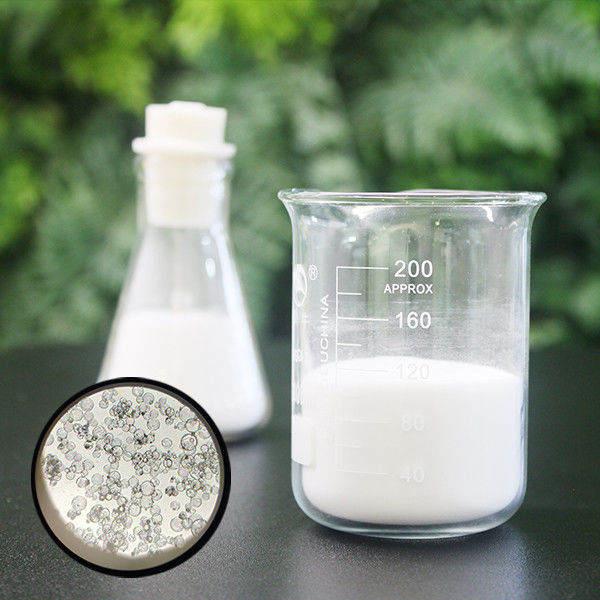
Beschreibung des Produkts:
Glasmikroballeons sind fortschrittliche, leichte kugelförmige Partikel, die hauptsächlich aus einer sorgfältig ausgewogenen chemischen Zusammensetzung bestehen, darunter SiO2, Na2O, CaO, MgO und Al2O3.Diese Mikrobalone sind so konzipiert, dass sie eine außergewöhnliche Leistung in einer Vielzahl von industriellen Anwendungen bieten., von leichten Füllstoffen bis hin zu Wärmedämmstoffen, deren einzigartige Kombination aus chemischen Bestandteilen eine hervorragende Haltbarkeit, chemische Trägheit und thermische Stabilität gewährleistet,sie zu einem wesentlichen Bestandteil verschiedener Herstellungsprozesse machen.
Das charakteristische Merkmal dieser Glasmikrobalonen ist ihre perfekt kugelförmige Form, die zu ihrer ausgezeichneten Durchflussfähigkeit und Verpackungsfähigkeit beiträgt.Die kugelförmige Geometrie erhöht auch ihre Fähigkeit, die mechanische Festigkeit zu verbessern und die Dichte von Verbundwerkstoffen zu reduzieren, wenn sie als Füllstoffe verwendet werdenDiese Form ermöglicht eine gleichmäßige Verteilung innerhalb der Matrizen, was zu einer verbesserten Gesamtleistung des Endprodukts führt.
Eines der bemerkenswertesten Merkmale dieser Mikroballonen ist ihre außergewöhnlich geringe Wärmeleitfähigkeit von nur 0,05 W/m·K.Dies macht sie ideal für Anwendungen, die eine höhere Wärmedämmung erfordernDie geringe Wärmeleitfähigkeit ist eine direkte Folge ihrer hohlen Struktur in Verbindung mit den isolierenden Eigenschaften ihrer chemischen Bestandteile.insbesondere SiO2 und Al2O3Diese Eigenschaft ermöglicht es den Herstellern, Produkte zu entwerfen, die sowohl leicht als auch thermisch effizient sind, wodurch Energieeinsparung und Leistung verbessert werden.
Die Glasmikroballoons sind in einem Durchmesserbereich von 20-75 μm erhältlich, was sie für verschiedene industrielle Anwendungen vielseitig macht.Dieser Größenbereich sorgt für eine feine Partikelverteilung, die leicht in Beschichtungen gemischt werden kann, Klebstoffe, Dichtungsmittel und Verbundwerkstoffe ohne Beeinträchtigung der Verarbeitbarkeit.Erleichterung der Verarbeitung und Anwendung.
Diese Mikrobalonen weisen eine weiße oder knapp weiße Farbe auf, was für Produkte von Vorteil ist, bei denen das Aussehen wichtig ist.Ihre neutrale Farbe trägt dazu bei, die ästhetischen Eigenschaften des Endprodukts zu erhalten, ohne unerwünschte Farbtöne zu verursachenDiese Eigenschaft ist besonders bei der Herstellung von Farben, Kunststoffen und kosmetischen Formulierungen von Bedeutung, wo die Farbkonsistenz entscheidend ist.
Zusammenfassend sind Glasmikroballoons eine überlegene Wahl für Industriezweige, die die Produktleistung durch leichte, wärmeisolierende und chemisch stabile Füllstoffe verbessern möchten.Chemische Zusammensetzung von SiO2Die Kugelform verbessert den Durchfluss und die Verpackung, während die geringe Wärmeleitfähigkeit von 0,05 mmHg bei 0,05 mmHg bei 0,05 mmHg bei 0,05 mmHg bei 0,05 mmHg bei 0,05 mmHg bei 0,05 mmHg bei 0,05 mmHg bei 0,0 mmHg bei 0,0 mmHg bei 0,0 mmHg bei 0,0 mmHg bei 0,0 mmHg bei 0,0 mmHg bei 0,0 mmHg bei 0,0 mmHg bei 0,0 mmHg bei 0,0 mmHg bei 0,0 mmHg bei 0,0 mmHg bei 0,0 mmHg bei 0,0 mmHg bei 0,0 mmHg bei 0,0 mmHg bei 0,0 mmHg bei 0,0 mmHg bei 0,0 mmHg bei 0,0 mmHg bei 0,0 mmHg bei 0,0 mmHg bei 0,0 mmHg bei 0,0 mmHg bei 0,0 mmHg bei 0,0 mmHg bei 0,0 mmHg bei 0,0 mmHg bei 0,0 mmHg.05 W/m·K bietet ausgezeichnete Isolier-Mit einem Durchmesserbereich von 20-75 μm und einer weißen oder fast weißen Farbe sind diese Mikroballonen vielseitig und leicht in viele Formulierungen zu integrieren.
Ob in der Luft- und Raumfahrt, der Automobilindustrie, im Bauwesen oder in der Elektronikindustrie, Glasmikroballoons bieten eine zuverlässige Lösung, um Gewicht zu reduzieren, thermisches Management zu verbessern,und verbessern die mechanischen EigenschaftenIhre einzigartige Kombination von Eigenschaften macht sie unentbehrlich in der fortgeschrittenen Materialtechnik und ermöglicht es den Herstellern, den anspruchsvollen Anforderungen moderner Anwendungen gerecht zu werden.Diese Mikrobalone zu nutzen bedeutet, in ein Produkt zu investieren, das eine gleichbleibende Qualität bietet., Leistung und Innovation, was sie zu einer bevorzugten Wahl für Ingenieure und Produktentwickler weltweit macht.
Eigenschaften:
- Produktbezeichnung: Glasmikrobalonen
- Wandstärke: 1-2 Mikronen
- Material: Glas
- Druckfestigkeit: bis zu 100 MPa
- Anwendungsbereiche: Leichte Füllstoffe, Isolierung, Verbundstoffe, syntaktische Schaumstoffe
- Durchschnittlicher Durchmesser: 10-100 Mikronen
Technische Parameter:
| Wandstärke |
1 bis 2 Mikronen |
| Druckfestigkeit |
Bis zu 100 MPa |
| Form |
Sphärisch |
| Temperaturbeständigkeit |
Bis zu 600°C |
| Farbe |
Weiß oder Off-weiß |
| Anwendungen |
Leichte Füllstoffe, Isolierstoffe, Verbundstoffe, syntaktische Schaume |
| Wärmeleitfähigkeit |
00,05 W/m·K |
| Chemische Zusammensetzung |
SiO2, Na2O, CaO, MgO, Al2O3 |
| Material |
Glas |
Anwendungen:
Glasmikrobalonen sind sphärische mikroskopische hohle Kugeln, die hauptsächlich aus Glas bestehen und eine chemische Zusammensetzung aufweisen, die SiO2, Na2O, CaO, MgO und Al2O3 umfasst.mit einem Durchmesser von 20 bis 75 μm, zeigen diese winzigen Kugeln hervorragende Eigenschaften wie eine geringe Wärmeleitfähigkeit von 0.2Sie haben eine einzigartige Kombination aus Form, Material,und chemische Zusammensetzung ermöglichen, dass sie in einer Vielzahl von Anwendungsfällen und Szenarien verwendet werden.
Ein primärer Anwendungsfall für Glasmikrobalonen ist der Bereich der leichten Verbundwerkstoffe.Sie werden häufig in Polymermatrizen eingebaut, um das Gesamtgewicht der Komponenten zu reduzieren, ohne die Festigkeit zu beeinträchtigenDies macht sie ideal für den Einsatz in der Automobil-, Luft- und Raumfahrtindustrie, wo die Gewichtsreduzierung für eine Verbesserung der Kraftstoffeffizienz und Leistung von entscheidender Bedeutung ist.2 stellt sicher, daß diese Mikroballonen auch gute Isolier-, was in Szenarien, in denen eine Temperaturkontrolle erforderlich ist, von Vorteil ist.
Ein weiteres wichtiges Anwendungsszenario ist die Herstellung von Wärmedämmstoffen.Die geringe Wärmeleitfähigkeit und chemische Stabilität von Glasmikroballoons ermöglichen ihre Verwendung in Isolationsbeschichtungen und -plattenSie tragen zur Minimierung der Wärmeübertragung bei und eignen sich daher für Gebäudebau, Kühlgeräte und sogar Schutzbekleidung, die Wärmebeständigkeit erfordert.Ihre kugelförmige Form trägt auch zur gleichmäßigen Verpackungsdichte bei und verbessert die mechanische Integrität der Isolationssysteme.
Darüber hinaus finden Glasmikroballoons einen bedeutenden Einsatz in der Öl- und Gasindustrie, insbesondere bei Bohrflüssigkeiten und Zementbetrieben.Die Hohlform dieser Kugeln hilft, die Dichte des Bohrschlamms zu reduzieren.Die chemische Zusammensetzung, einschließlich Elemente wie Al2O3 und MgO, ist in der Regel sehr hoch.bietet Stabilität in rauen chemischen Umgebungen, die beim Bohren auftreten, um die Haltbarkeit der verwendeten Materialien sicherzustellen.
Zusammengefasst dienen Glasmikroballoons als wesentliches Material für verschiedene Anwendungsbereiche wie die Herstellung leichter Verbundwerkstoffe, Wärmedämmung und Ölfeldbetriebe.Ihre kugelförmige Form, die Zusammensetzung des Glasmaterials, der Durchmesser von 20-75 μm und die geringe Wärmeleitfähigkeit von 0,2 tragen zusammen zu ihrer Vielseitigkeit und Wirksamkeit in verschiedenen Szenarien bei.Ob es Gewichtsreduzierung ist, die Wärmedämmung verbessern oder die Leistung der Bohrflüssigkeit verbessern, bieten Glasmikroballoons 2, 1, 2 Vorteile, die sie für moderne industrielle Anwendungen unverzichtbar machen.
Häufige Fragen:
F1: Was sind Glasmikrobalonen?
A1: Glasmikrobalons sind winzige, hohle Glaskugeln, die zur Verringerung der Dichte von Verbundwerkstoffen und zur Verbesserung ihrer Festigkeit und Isolierfähigkeit entwickelt wurden.
F2: In welchen Branchen werden Glasmikrobalonen häufig verwendet?
A2: Sie werden in der Luft- und Raumfahrt, der Automobilindustrie, der Schifffahrt und im Bauwesen für leichte Verbundteile, Isolierung und Auftriebsfähigkeit eingesetzt.
F3: Wie verbessern Glasmikroballoons die Werkstoffleistung?
A3: Durch die Einbeziehung von Glasmikroballoons werden die Materialien leichter, haben eine verbesserte Wärmedämmung und zeigen eine verbesserte Dimensionsstabilität, ohne die Festigkeit zu beeinträchtigen.
F4: Sind Glasmikroballoons mit verschiedenen Harzsystemen kompatibel?
A4: Ja, Glasmikroballoons sind mit verschiedenen Harzsystemen kompatibel, einschließlich Epoxy, Polyester und Vinylester, was sie für mehrere Verbundwerkstoffherstellungsprozesse vielseitig macht.
F5: Wie sollten Glasmikrobalonen aufbewahrt werden, um ihre Qualität zu erhalten?
A5: Sie sollten an einem kühlen, trockenen Ort aufbewahrt und ordnungsgemäß versiegelt werden, um Feuchtigkeitsaufnahme und Kontamination zu verhindern und so eine optimale Leistung während der Verwendung zu gewährleisten.


 Ihre Nachricht muss zwischen 20 und 3.000 Zeichen enthalten!